

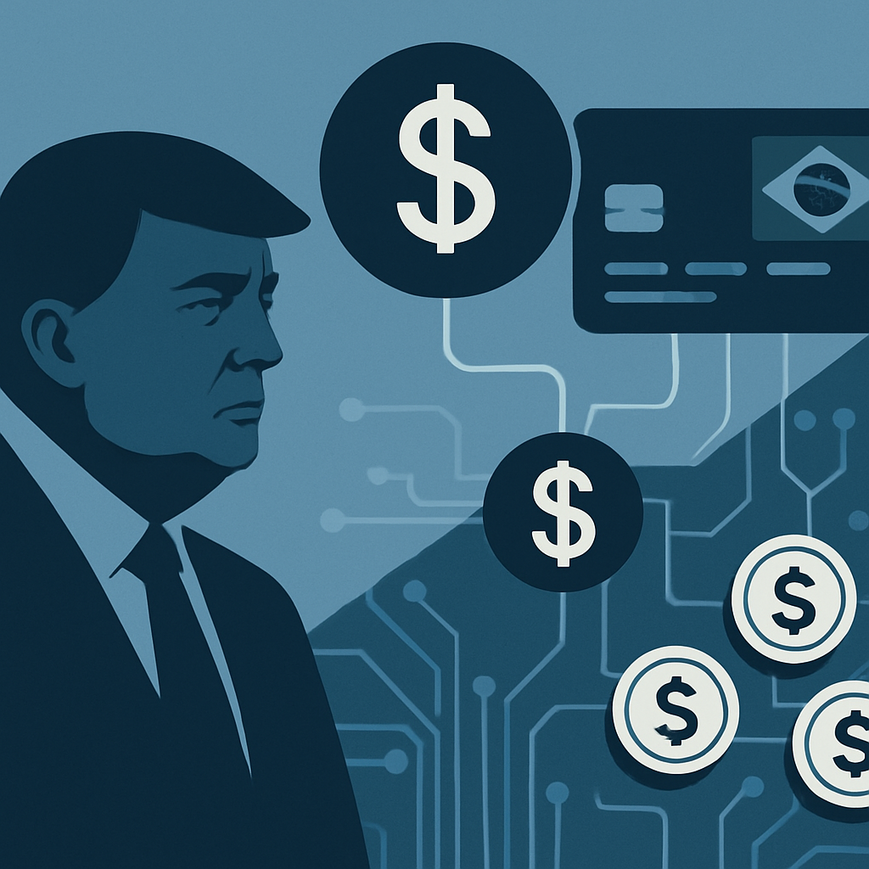
Why Washington is paying attention to Brazil’s payments shift
Policy concerns and strategic risk
U.S. officials have signaled concern as Brazil promotes non-dollar rails like Pix and paves the way for broader stablecoin adoption. The core worry is strategic: widespread use of alternatives to the US dollar for everyday and cross-border transactions could erode dollar-based financial dominance and complicate existing sanctions and trade controls.
Geopolitics and economic leverage
Beyond monetary policy, this is geopolitics. Washington’s scrutiny reflects fears that a payments ecosystem less reliant on the US dollar makes it harder for the U.S. to exert financial pressure. That context helps explain why political figures are targeting Brazil’s payments architecture even while private-sector dollar-linked stablecoins quietly capture market share.
Dollar-linked stablecoins now dominate Brazil’s crypto flows
Near-total share of on-chain activity
Multiple sources report that dollar-linked tokens make up roughly 90% of Brazil’s crypto transactions. This dominance means dollar stablecoins are not a fringe instrument — they have become a core part of how Brazilians move value on-chain, from remittances to trading and merchant settlement.
USDT vs USDC and market depth issues
Most of that market share sits with USDT and USDC, whose liquidity and exchange listings make them the go-to instruments. However, market structure data shows about $542 million a week is sitting outside active trading ranges, earning zero fees and providing no market depth. That idle capital can distort liquidity signals and increase vulnerability when markets reprice.
Pix and stablecoins: coexistence or competition?
How Pix reshaped retail payments
Pix transformed Brazil’s domestic payments by offering instant, low-cost transfers through the banking system. Its high adoption rate made it the backbone of Brazil payments overnight — a model many countries now study.
Where stablecoins fit in retail and cross-border flows
Stablecoins add a dollar-denominated layer on top of Pix. For domestic use, Pix remains dominant; for dollar exposure, cross-border remittances, and crypto-native services, dollar stablecoins are increasingly preferred. This hybrid use-case is central to the debate: is stablecoin adoption complementing Pix or gradually supplanting dollar-denominated rails?
Market mechanics: trapped liquidity and trader positioning
Idle capital and liquidity risks
The $542 million weekly sitting outside active ranges highlights a market inefficiency. Capital parked far from where trading occurs provides no market depth and can exaggerate moves when it re-enters active ranges — a fragile dynamic for a market already sensitive to macro shocks.
Options flow and bullish bets on Bitcoin
Meanwhile, derivatives flow shows large traders betting on a Bitcoin move to $72,000 by month-end. Those positions, paired with thin ETF inflows and liquidation heatmap data, mean price action could be amplified in either direction — a reminder that stablecoin-dominated flows are part of a broader, levered market ecosystem.
Big fintech moves and regulatory shifts reshaping rails
Visa, Circle and institutional integration
Corporate moves matter: Visa’s launch of a stablecoin platform and Circle’s federal trust bank approval are creating institutional rails for digital dollars. Those platforms let banks and fintechs issue, manage and settle digital dollars — directly intersecting with how dollar stablecoins are used in Brazil and globally.
Global policy responses and local experiments
Across the region, responses vary: Bolivia is moving to recognize USDT amid dollar shortages, the EU’s MiCA rules offer alternatives to Tether for European customers, and central banks like the Bank of England and ECB warn about deposit erosion while pitching digital fiat as the structural fix. These shifts accelerate stablecoin adoption while inviting more political scrutiny.
What this means for Brazilian consumers, banks and markets
Pressure on traditional banks and the payments ecosystem
As dollar stablecoins gain traction, Brazilian banks face potential deposit displacement and changing revenue mixes. Regulators and incumbents must decide whether to integrate stablecoin rails, build CBDCs or double down on Pix enhancements to retain their centrality in Brazil payments.
Risks for users and opportunities for innovation
For consumers, stablecoins can lower remittance costs and provide easier dollar access. But risks remain: liquidity gaps, cybersecurity threats (recent malware campaigns targeting crypto users), and regulatory uncertainty could expose users. At the same time, tokenization pilots and institutional interest promise new financial products that blend fiat rails with on-chain efficiency.
Frequently Asked Questions
Are dollar stablecoins legal in Brazil?
Dollar stablecoins are not explicitly banned in Brazil; they operate in a gray area regulated by market rules and anti-money laundering frameworks. Local regulators are increasingly attentive and may adapt rules as adoption grows.
Will Pix be replaced by stablecoins?
Unlikely in the near term. Pix dominates domestic retail payments due to ubiquity and low cost. Stablecoins are more likely to coexist with Pix, serving cross-border transfers, dollar-denominated commerce, and crypto-native applications.
Could U.S. policy curtail stablecoin use in Brazil?
U.S. policy can influence global stablecoin infrastructure, especially through sanctions and financial messaging. However, outright restriction of decentralized usage in another sovereign country is limited; diplomatic pressure and international coordination would be the likeliest levers.