Zakura’s architecture and the 50,000 TPS claim
Technical outline of the new node
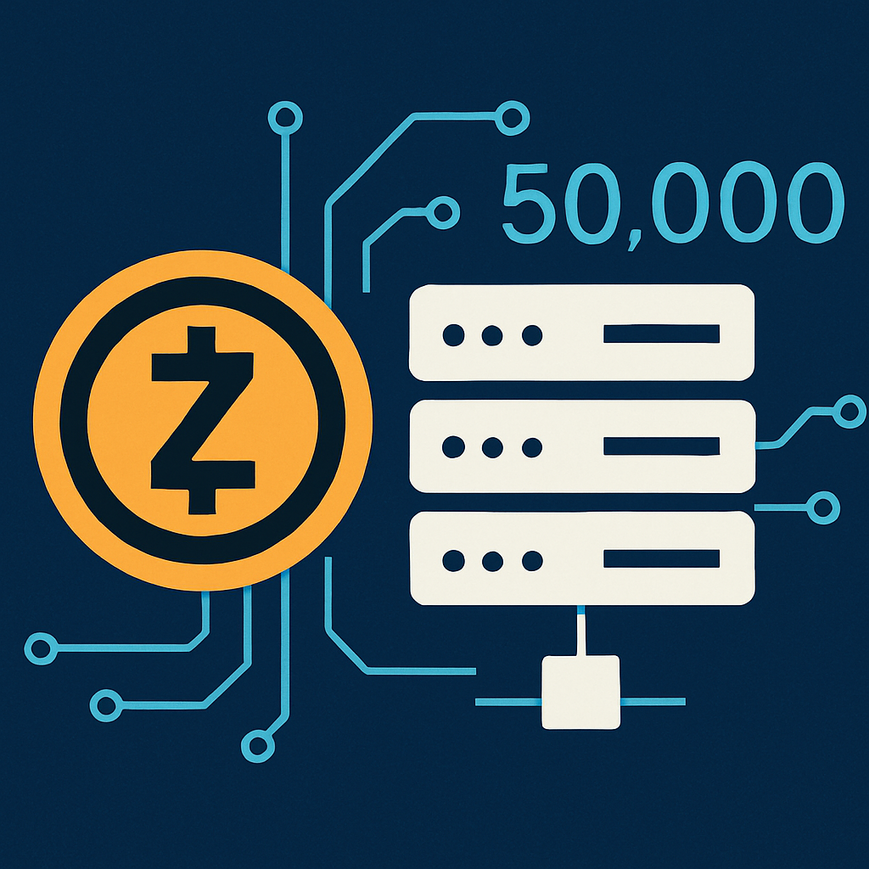
The Zakura client is being touted as the first live piece of an ambitious plan to scale Zcash from roughly one private transaction per second to payment-network scale. The team describes a modular node design focused on high-throughput networking, parallelized cryptographic verification, and batch processing of shielded transactions. Early benchmarks claim throughput that could approach Visa-scale transactions, but independent audit and sustained mainnet stress testing will determine real-world performance.
Which cryptography underpins the speed?
Zakura leverages optimized implementations of zero-knowledge proofs to validate shielded transfers without revealing sensitive data. By reworking the proof aggregation and verification pipeline, the client aims to reduce per-transaction CPU and I/O overhead—key bottlenecks that have historically limited privacy payments on public chains.
How Zakura aims to deliver Visa-scale privacy
Aggregation, batching and network plumbing
Rather than changing consensus rules, the Zakura client focuses on client-layer improvements: transaction aggregation, network gossip optimization, and verification parallelism. These design choices target Visa-scale transactions while preserving shielded privacy semantics, meaning users could see private transfers processed at much higher rates than today.
Privacy versus throughput trade-offs
Scaling privacy payments often forces trade-offs: larger proofs, different trust models, or new pre-processing steps. Zakura attempts to balance those by minimizing trusted setup surface and keeping zero-knowledge proofs compatible with existing Zcash privacy guarantees. Still, third-party analysis will be needed to verify no subtle compromises were introduced for the sake of performance.
Implications for Zcash, DeFi and payments
Real-world adoption and merchant rails
If Zakura delivers on its claims, Zcash could become a viable option for merchants and remittance corridors that require both speed and privacy. Payment processors and wallets would need to integrate the client and its batching models to realize throughput improvements in production.
Liquidity, exchanges and on/off ramps
Higher private throughput could change how exchanges and custodians manage on-chain flows. Meanwhile, with about $542 million sitting outside active trading ranges in broader markets this week, institutions are still hunting for liquidity-efficient rails. A scalable privacy layer could attract new flows—if custody, compliance and liquidity providers adapt.
Governance, competing proposals and community tension
BIP 110, DOG Mode and the broader debate
The Zcash ecosystem is no stranger to heated governance debates. Elsewhere in crypto, proposals like BIP 110 aim to restrict non-financial data through consensus, while alternative clients such as a new DOG Mode want the opposite with no vote required. Zakura’s approach—client-level scaling with cryptographic advances—sidesteps consensus fights, but adoption will depend on developer and miner ecosystem support.
Adoption incentives and economic effects
Leonidas and others have argued that economic incentives will drive adoption of new clients over time. For Zakura, those incentives include lower fees per transaction and improved UX for privacy payments. However, institutions and node operators must see measurable benefits and regulatory clarity before switching.
Market context: macro pressure, security risks and institutional momentum
Volatility, options bets and macro headwinds
The launch of Zakura arrives amid a choppy market: large traders are betting on Bitcoin rising to $72,000 by month-end in options flow, but chipmaker selloffs, AI stock fatigue, and geopolitical tensions have pulled risk assets lower. Bitcoin’s movement with equities and recent rejection at local highs highlight how macro events can overshadow protocol-level innovation.
Security warnings and industry shifts
Security firms like Kaspersky have flagged new malware frameworks targeting crypto investors, and regulators are actively reshaping stablecoin policy. Institutional moves—Circle’s federal trust bank approval, Wall Street tokenization surveys, and SBI’s stake acquisitions—show the industry is professionalizing even as threats and geopolitics weigh on sentiment. Zakura will need robust node security and upgrade guides to win enterprise trust.
Roadmap, audits and what to watch next
Mainnet milestones and independent review
Watch for audited benchmarks, third-party cryptographic reviews, and production workloads from wallet and exchange partners. Successful lab results are promising, but sustained 24/7 throughput on mainnet with a diverse node set is the real test for a client that promises Visa-scale transactions.
Interoperability and regulatory fit
For Zakura to power broad privacy payments, custodians, compliance providers, and regional regulators must be able to interface with the Zcash ecosystem. Expect conversations about proof-of-compliance patterns, privacy-preserving analytics, and the tension between on-chain confidentiality and off-chain KYC/AML requirements.
Frequently Asked Questions
What is the Zakura client and why does it matter?
Zakura client is a new Zcash node implementation designed to scale shielded transactions by optimizing proof verification, batching, and network layer performance. It matters because it aims to move Zcash toward Visa-scale transactions while preserving privacy payments.
Can Zakura deliver 50,000 transactions per second on mainnet?
Lab benchmarks and architectural claims suggest the potential, but real-world 50,000 TPS depends on widespread adoption, audited zero-knowledge proofs performance, and mainnet stress testing across diverse hardware and network conditions.
How will regulators and exchanges react to increased privacy throughput?
Responses will vary. Some custodians and exchanges may demand privacy-preserving compliance tools, while regulators could scrutinize higher private throughput more intensely. Successful adoption will require clear compliance patterns and secure integration with existing on/off ramps.