Saylor slams the proposal — why the debate matters now
Michael Saylor’s stance and core argument
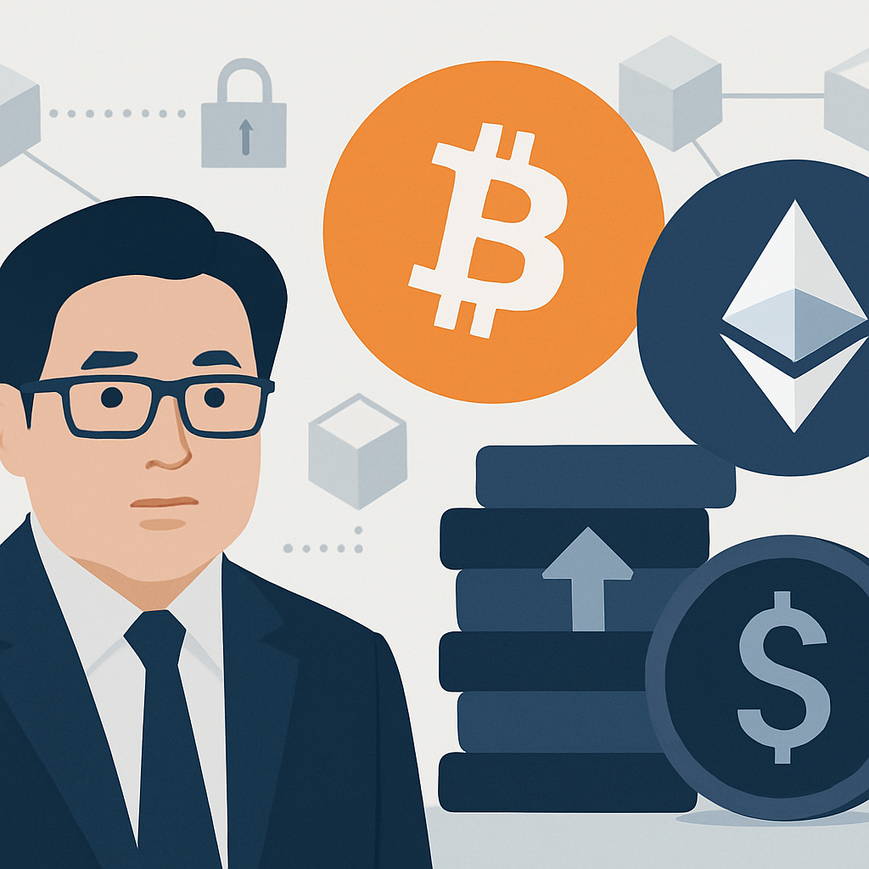
Michael Saylor, the most vocal corporate backer of Bitcoin, publicly condemned BIP-110 and the idea of a temporary fork to block non-financial data. He framed the move as a threat to Bitcoin’s neutrality, arguing that any mechanism to selectively exclude transactions sets a precedent for censorship and variable policy enforcement. For Saylor, the objectives behind the proposal—reducing spam and preserving ledger utility—are understandable, but the remedy is worse than the problem.
The context that made the issue explode
The Bitcoin censorship debate resurfaced at a sensitive time: markets are reacting to macro moves, tokenization and institutional flows are accelerating, and new technical risks—from quantum threats to AI-driven transaction patterns—are being actively discussed. That convergence turned a protocol governance argument into a broad industry flashpoint that touches developers, miners, exchanges, regulators and large corporate holders.
What BIP-110 actually proposes
Mechanism and intent of the draft
BIP-110 is a proposal to temporarily block certain kinds of non-financial data deemed “spam” by validators, implemented via a short-lived fork. Proponents say it would keep the ledger focused on financial settlement and reduce bloat that increases node operating costs.
Why supporters think it’s a pragmatic patch
Supporters argue BIP-110 is a targeted, temporary fix to a specific problem: rising on-chain storage of non-payment data that can degrade full-node performance and raise fees for regular users. In an era of onchain social features and large-data transactions, some developers see a patch as a necessary operational tool.
Neutrality, censorship and the governance trade-offs
Hard questions about who decides what’s “spam”
Central to the Bitcoin censorship debate is governance: who decides which transactions are non-financial and therefore blockable? Introducing discretionary rules risks concentrating decision-making power among miners, core devs, or major treasury holders, undermining the long-standing guardrails that protect Bitcoin’s neutrality.
Precedent risks and slippery slopes
Even a narrowly scoped temporary fork can set a slippery slope. Once the network accepts blocking certain payloads, it becomes easier to justify future exclusions. That risk is the heart of Saylor’s objection: shared policy goals (less spam) do not justify a structural change that could be repurposed for censorship.
Technical alternatives and emerging cryptographic tools
Zero-knowledge proofs, privacy layers and Succinct Labs’ pitch
Not everyone agrees a fork is needed. Brian Trunzo of Succinct Labs argues that zero-knowledge proofs and succinct verification can reduce on-chain bloat without censoring data. ZK proofs let the network verify computational outcomes or data integrity with compact proofs—offering a technical path to scalability and privacy that sidesteps policy enforcement.
Post-quantum and wallet recovery innovations
Other technical conversations in the week’s news dovetail with this debate. Project Eleven announced a post-quantum ownership proof that lets a wallet prove ownership via its key-derivation path in milliseconds—an example of how cryptographic innovation can address new threats (like Q-Day) without changing consensus rules. These advances show the community has tools to minimize risky governance changes while adapting to new threats.
Market reaction, institutional stakes and broader news ties
Price action, options flow and institutional positioning
The Bitcoin censorship debate didn’t occur in a vacuum. Markets were already volatile: chipmaker selloffs and geopolitical tensions pulled Bitcoin down from a recent $65k high, while options flows revealed large traders betting on a move to $72,000 by month-end. Corporate treasuries and major ETF flows amplify why protocol stability matters—investors price governance risk.
Regulation, tokenization and industry shifts
Regulatory uncertainty is another factor amplifying sensitivity to protocol changes. With the GENIUS Act deadlines slipping, global tokenization efforts accelerating (Broadridge survey), and new products like USD-settled BTC and ETH options launching, stakeholders want predictable rails. A controversial temporary fork could spook institutional entrants and complicate compliance stances worldwide.
What comes next — stakes and likely outcomes
Paths forward for Bitcoin and the community
Expect intense debate ahead of any activation deadline. Options include shelving BIP-110, reframing it with stricter limits and community vetting, or pursuing technical alternatives such as ZK-based solutions, improved mempool policies, or off-chain social data channels. High-profile voices like Michael Saylor will continue to shape public opinion, but protocol outcomes depend on decentralized consensus.
Why the Bitcoin censorship debate will matter long-term
Beyond this single proposal, the episode raises enduring questions: how does Bitcoin balance utility and purity? How will the ecosystem handle emergent threats—spam, quantum computers, or AI-driven load—without centralizing policy control? The answers will shape Bitcoin’s design and adoption for years.
Frequently Asked Questions
What is BIP-110 and why is it controversial?
BIP-110 is a proposal to temporarily block certain non-financial data on the Bitcoin chain via a short-lived fork. It’s controversial because critics say it could enable censorship, centralize decision-making, and set a precedent that undermines Bitcoin’s neutrality.
Why does Michael Saylor oppose the proposal?
Michael Saylor opposes the proposal because he believes any mechanism that allows selective blocking of transactions threatens Bitcoin’s neutrality and could be repurposed for censorship, despite agreeing with the goal of reducing spam.
Are there technical alternatives to a temporary fork?
Yes. Alternatives include zero-knowledge proofs and succinct verification to reduce on-chain bloat, improved mempool and relay policies, off-chain data storage, and cryptographic upgrades like the post-quantum ownership proofs announced by Project Eleven.

![[crypto options market]](https://cryptonews.guru/wp-content/uploads/2026/07/data-88.png)