


A new client, a renewed fight: why DOG Mode matters
The immediate technical provocation
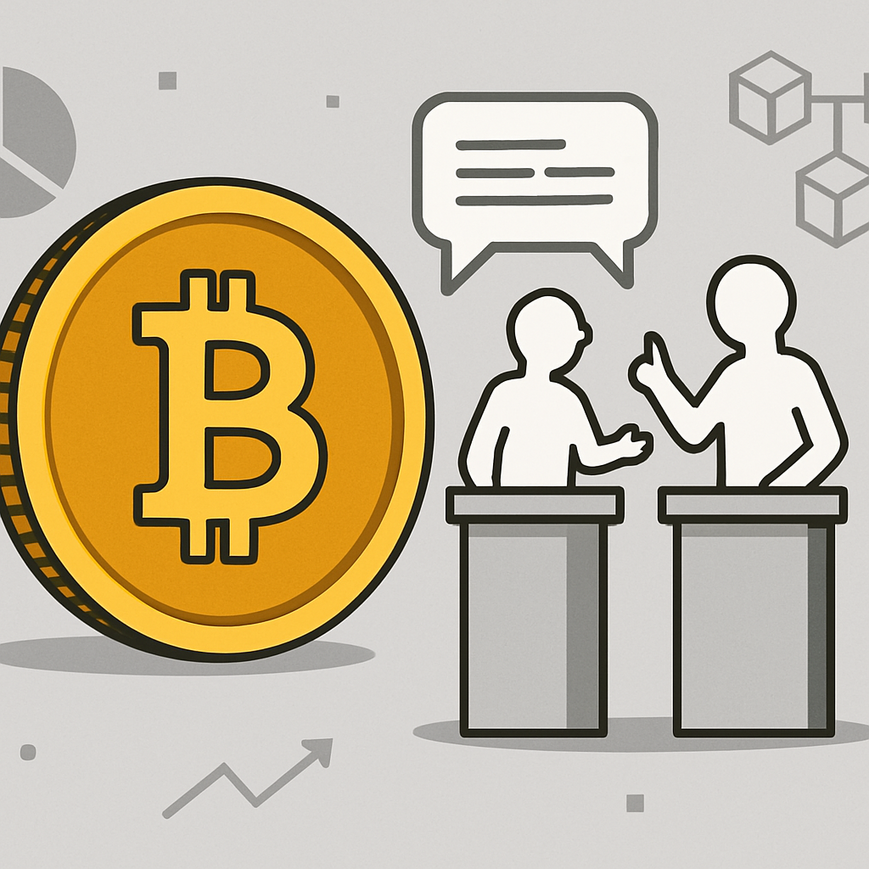
Leonidas’ DOG Mode client has reignited a debate by deliberately altering how nodes treat certain transactions. Unlike protocol changes that require miner or developer consensus, DOG Mode modifies node behavior at the client level, challenging Bitcoin’s default relay policy and forcing the network to confront the practical boundary between optional client features and consensus rules.
What DOG Mode seeks to achieve
DOG Mode Bitcoin proponents argue the client restores market-driven acceptance of transactions, removing what they see as gatekeeping by Bitcoin Core. Leonidas said economic incentives will naturally push adoption: “Over time the economic incentives will drive $DOG Mode’s adoption and force Bitcoin Core to stop gatekeeping,” reflecting a philosophical stance that transaction relay should follow free-market incentives rather than centralized defaults.
Technical contrast: DOG Mode vs BIP 110
Relay policy vs consensus changes
BIP 110 proposed a consensus-layer restriction on non-financial data, which would have required broad miner support to activate. By contrast, DOG Mode changes only node relay policies and requires no vote. That difference is crucial: consensus-layer proposals like BIP 110 are binding on all validating nodes once activated, whereas client-level relay policy shifts rely on voluntary adoption and economic pressure.
Why developers and miners are split
Support for BIP 110 is minimal among miners, and many developers caution against hardcoded restrictions. DOG Mode Bitcoin polarizes the community by flipping the script: instead of a consensus vote to restrict data, it offers an opt-in path to accept more data. That opens a governance question—who really governs Bitcoin: the code activated by consensus, the major client maintainers, miners, or the economic majority?
Governance implications for Bitcoin’s future
The semantics of “governance” in a decentralized network
The DOG Mode controversy spotlights a long-standing governance tension: decentralization in practice depends on who writes, ships, and runs client software. If enough economic actors (exchanges, custodians, miners) adopt DOG Mode, its policies could become de facto standard without a formal vote. That dynamic blurs the line between formal Bitcoin governance and market-driven rule-setting.
Risks of client-level rule changes
Allowing clients to redefine relay policy risks fragmentation, replay hazards, or network splits if actors diverge. Opponents worry about long-term technical debt and censorship vectors; proponents argue that forcing all changes through consensus can be slow and stifling. The DOG Mode Bitcoin debate will test whether market adoption or developer conservatism prevails.
Market reaction and macro backdrop
Price moves, options bets, and liquidity quirks
Markets responded to wider macro forces this week: bitcoin briefly touched the mid-$60k range then declined as chipmaker selloffs and geopolitical tensions weighed. Options flow suggests large traders are betting on a BTC surge to $72,000 by month-end, even as roughly $542 million in BTC sits outside active trading ranges and earns no fees—idle capital that offers no market depth.
Sentiment signals and technicals
A technical indicator hinted at oversold conditions heading into the weekend, while ether volatility trades attracted a mega trade positioned to profit from a surge in ether turbulence. ETF inflows were modest but steady, with US spot Bitcoin ETFs drawing $79.2 million on Thursday. Still, U.S.-Iran tensions and AI stock fatigue added risk-off pressure that pulled bitcoin back from highs.
Broader crypto ecosystem effects
Regulation, stablecoins, and institutional moves
The DOG Mode governance fight coincides with regulatory and market shifts: Washington is watching Brazil’s push for non-dollar payment channels and stablecoin growth even as dollar-linked stablecoins dominate Brazilian crypto activity. Visa launched a stablecoin platform for banks, and Circle won OCC approval for a national trust bank—moves that accelerate institutional stablecoin adoption and tokenization efforts.
Wall Street, tokenization, and cybersecurity headwinds
A Broadridge survey shows Wall Street accelerating tokenization and expecting hybrid markets where traditional and digital assets coexist. At the same time, cybersecurity warnings (Kaspersky and macOS malware reports) and high-profile hacks like Ostium’s $18M drain underscore operational risks. These crosscurrents will shape how custodians and exchanges respond to client-level governance changes like DOG Mode Bitcoin.
Practical outcomes to watch in the coming weeks
Adoption signals and network metrics
Key things to track: how many major node operators, custodians, and exchanges run DOG Mode Bitcoin; mempool behavior and relay divergence; and whether miners signal any reaction. If economic actors embrace the client, relay policy could shift without protocol votes, changing how non-financial data is treated on-chain.
Market and regulatory feedback loops
Expect coordinated responses: regulators and self-regulatory bodies may weigh in if client-level changes affect consumer protections or compliance. Market participants will also adjust hedges and liquidity provisioning if relay policy differences create new on-chain dynamics or alter fee market behavior.
Frequently Asked Questions
What is DOG Mode Bitcoin and how does it differ from protocol changes?
DOG Mode Bitcoin is a client-level implementation that changes transaction relay behavior without a consensus vote. Unlike protocol upgrades or proposals like BIP 110, which require miner and node consensus to alter consensus rules, DOG Mode operates as optional client software that nodes can choose to run.
Could DOG Mode cause a chain split or network instability?
A chain split is unlikely solely from relay policy differences because consensus rules remain unchanged. However, divergent relay policies can lead to temporary mempool inconsistencies, transaction propagation delays, and increased complexity for wallets and services until market adoption converges.
How should exchanges, miners, and custodians respond to DOG Mode?
They should evaluate operational risk, compliance implications, and market demand. Exchanges and custodians must decide whether supporting DOG Mode Bitcoin aligns with their risk appetite, while miners will consider whether any economic incentives exist to prefer one client’s mempool over another. Monitoring adoption and coordinating safeguards is prudent.

![[Robinhood DeFi]](https://cryptonews.guru/wp-content/uploads/2026/07/data-76.png)