

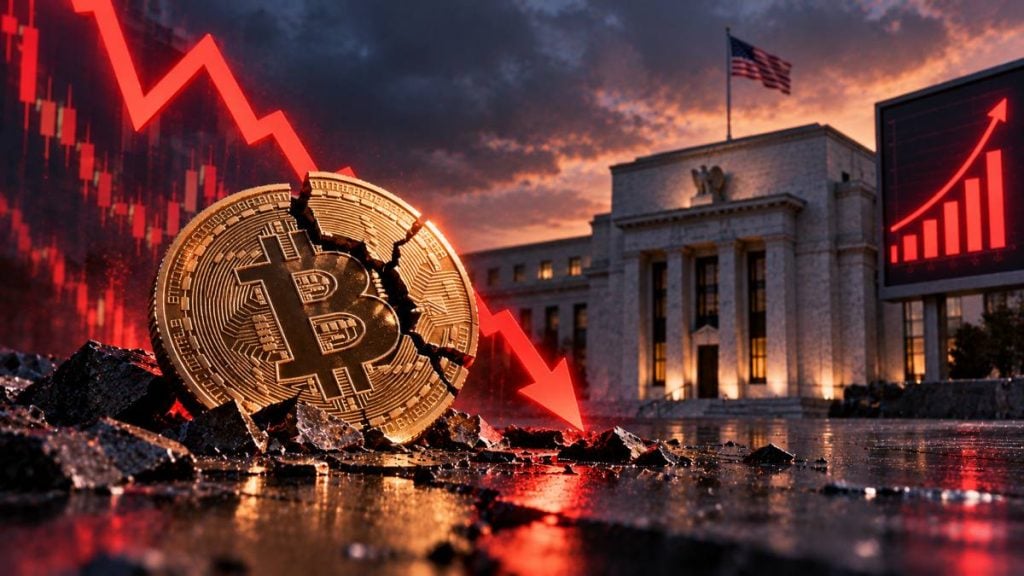
Fed’s Rate Hike Signals Draw Investor Criticism
Mixed Signals: What the Data Really Shows
As the Federal Reserve continues to lean towards more interest-rate hikes, a chorus of critics—ranging from market analysts to academic economists—argue that the central bank’s focus is misplaced. Many experts point out that energy and gasoline prices are already dropping, a strong sign that inflationary pressure is beginning to fade. Despite this, the Fed appears set to act on lagging indicators, fueling worries that aggressive monetary tightening could choke the recovery and unsettle financial markets. For those in the cryptocurrency sector, such rate decisions are notoriously impactful, affecting both investment appetites and digital asset valuations.
Inflation Trends: The Mismatch With Policy Direction
The disconnect between softening energy prices and the Fed’s hawkish stance is painting a confusing picture for investors. Some suggest the central bank risks overcorrecting, potentially pushing the economy into a downturn just as price increases are subsiding. For digital assets, any turbulence in traditional markets tends to amplify volatility, as traders seek to reposition portfolios amid shifting macro narratives.
Automated Trading Bots: Copycat Exploits Strike DeFi Vaults
The sBOLD Vault Incident: A Closer Look
Automated trading bots are on the rise, and their sophistication is becoming a headache for DeFi protocols. Recently, a bot mimicked a high-profile attack on K3 Capital’s sBOLD vault, making off with more than half the vault’s contents. The attacker’s strategy? Outbid other network participants for transaction priority, ensuring their theft was processed first while splurging most of the stolen funds on gas fees. Incidents like this underline the relentless arms race between DeFi defenders and would-be exploiters.
Implications for Security in Decentralized Finance
The vault exploit highlights a crucial challenge: DeFi security measures must evolve as quickly as the bots looking to breach them. For crypto investors and protocol designers, staying ahead means prioritizing robust auditing and anticipating sophisticated attack vectors, particularly as automated tools become more accessible.
Institutional Players Navigate Market Shifts
Hyperscale Data Sheds Bitcoin to Finance Expansion
In the latest example of crypto’s growing ties to mainstream industry, Hyperscale Data recently offloaded its remaining bitcoin holdings and raised fresh debt to plug a $74.8 million funding gap for its Michigan data center. The move shows how some companies are liquidating digital assets to fund real-world projects, tying their fortunes to both crypto price swings and traditional capital markets.
Bullish Exchange Benefits From Institutional Focus
While retail-driven platforms struggle, some institutional exchanges are bucking the trend. Bullish, the crypto exchange targeting professional investors, reported a notable earnings beat—one analysts credit to its institutional orientation. As retail activity wanes, companies that built with big-ticket clients in mind seem better equipped to withstand downturns and benefit from prevailing macro winds.
AI, Blockchain, and the Next Wave of Banking Innovation
BNB Chain and Anthropic Tokens: Launching Fast on AI IPOs
Changpeng Zhao’s announcement that tokens related to bStocks, Ondo, and xStocks will go live on BNB Chain the moment AI giant Anthropic debuts on Nasdaq is turning heads. The mad rush to get in on AI-driven crypto assets, particularly with a mammoth $500 million lined up pre-IPO, signals a market hungry for crossover between artificial intelligence and blockchain. However, traders have been warned—the fine print on these offerings is not for the faint-hearted.
Stablecoin Innovations Sweep Across Asia
Institutions and banks are ramping up their embrace of stablecoins such as USDC, with Singapore leading the way by offering direct access for redemptions. Meanwhile, Asian banks are experimenting with their own blockchain-based payment systems, indicating that crypto-backed financial products are moving into the mainstream, particularly for institutional clients.
Legal and Regulatory Uncertainties Complicate Markets
Prediction Markets Face Federal Hurdles
As the U.S. Commodity Futures Trading Commission pressures prediction markets to open nationwide, federal courts remain a stumbling block. This legal impasse is a reminder that regulatory clarity is still elusive in the crypto sector and that expansion efforts are frequently checked by jurisdictional hurdles.
Custody and Security Questions Take Center Stage
Recent security breaches, such as the major Binance outflow and subsequent judicial actions to recover funds, have reignited the debate about where and how digital assets should be stored. Komainu’s Darren Jordan advocates separating custody from trading—as is standard in traditional finance—to safeguard institutional wealth. The fast-moving saga around wallet-linked thefts shows just how high the stakes are and how quickly client money can be put at risk.
Frequently Asked Questions
What are the main risks of more Fed rate hikes for crypto?
Rate hikes tend to reduce liquidity and increase borrowing costs—two factors that can dampen enthusiasm for riskier assets like cryptocurrencies. If higher rates tip the economy into recession, crypto could see both volatility and outflows.
How are institutions responding to shifting crypto markets?
Many institutional players are doubling down on risk management, diversifying their portfolios, and focusing on infrastructure investments. Exchanges tailored to institutions, such as Bullish, are faring better than those reliant on retail trading.
Why is custody separation important in crypto?
Separating custody from trading reduces the risk of asset mismanagement, theft, or conflict of interest—a principle that has long underpinned traditional finance but is still being debated in cryptocurrency markets.