

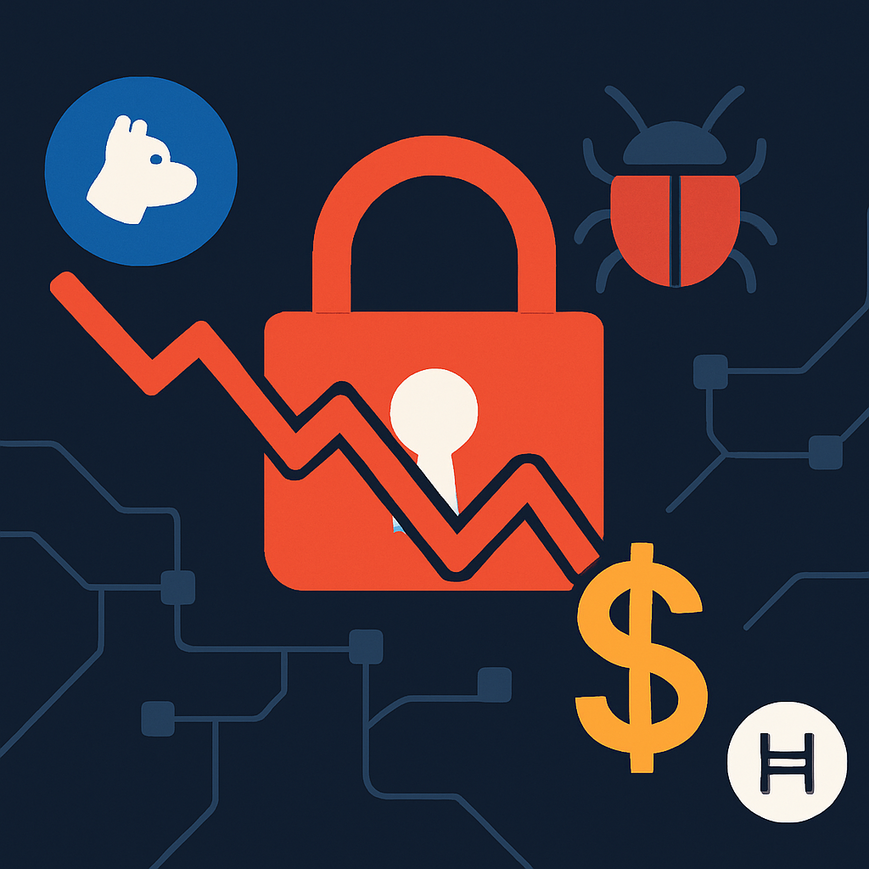
Exploit summary on the Hedera network
Attack timeline and headline figures
On July 10, multiple sources confirmed that Bonzo Lend lost roughly $9.05 million after an attacker abused a verification flaw in a third‑party Supra oracle contract. The incident on the Hedera network saw the attacker inflate SAUCE collateral values, borrow about $9 million from Bonzo Lend, and drain protocol funds in a matter of blocks.
Two wallets, mixed motives
Reports show the main offending address borrowed the bulk of funds, while a second wallet later borrowed roughly $1 million and identified itself as a white‑hat, saying it would return the funds. Whether those amounts are ultimately recovered remains unclear, and the community is watching on‑chain movements closely.
The root technical failure: Supra oracle verifier
How the Supra oracle verification flaw was exploited
Investigations point to a verification bug in the Supra oracle contract that feeds price and collateral data to Bonzo Lend’s smart contracts. The attacker manipulated on‑chain oracle inputs so the protocol accepted inflated valuations—allowing massive over‑collateralized borrowing against the manipulated SAUCE collateral.
Why this mattered for Bonzo Lend
Bonzo Lend relied on the external price feed for liquidation and collateral checks. The failure of the Supra oracle verifier to properly authenticate or validate those updates meant the protocol trusted manipulated prices and allowed loans far above safe collateralization thresholds.
Immediate protocol and ecosystem impact
TVL hit and user confidence
Bonzo Lend’s value locked plunged by about 77% following the attack. That dramatic drop not only wipes out liquidity but also damages depositor confidence—decentralized lending protocols live and die on trust and robust oracle integrity.
Reputational ripple across the Hedera network
Because the exploit involved a common middleware component rather than a Bonzo contract bug alone, the incident rattled operators and builders across the Hedera network. Anyone depending on the same Supra oracle or similar verification layers must now reassess risk exposure.
Oracle risk and the shifting security landscape
Oracles as systemic single points of failure
This incident underscores a recurring DeFi truth: oracles are frequently the weakest link. Even well‑coded lending contracts become vulnerable if the external feed they rely on can be spoofed or incorrectly verified. Bonzo Lend exploit scenarios highlight the need for multi‑source feeds, fail‑safes, and more rigorous verifier audits.
AI, audit fuzzing, and false positives
The broader crypto community has been experimenting with AI agents to hunt bugs: recent work by Ethereum researchers showed automated agents can trigger remotely‑reachable crashes and produce confident, well‑written reports that are sometimes not real bugs. That dynamic complicates security work—teams must differentiate between genuine attack vectors (like the Supra oracle flaw) and plausible but incorrect AI findings.
Market and institutional knock‑on effects
Liquidity, flows and market reaction
Although this exploit was localized, it arrived into a market already digesting volatile flows: spot bitcoin funds lost about $95 million and ether funds roughly $52 million on the same trading day even as BTC rebounded to around $64,400. Incidents like the Bonzo Lend exploit tend to tighten risk premia, reduce on‑chain activity, and make institutional counterparties more cautious.
Funding constraints and public listings
While not regulatory in nature, funding constraints and investor caution—heightened by security incidents—are cited by market professionals as a key reason crypto IPOs are being delayed. When protocols lose users and TVL, the path to healthy financial disclosure and public market readiness becomes harder.
Response, remediation and what to watch next
Claims, reimbursements and coordination
Bonzo Lend, Supra, and Hedera validators will need to coordinate fixes: patching the oracle verifier, hardening input validation, and pursuing any traceable recoveries. Community governance will also be pressured to consider emergency funds or partial reimbursements if funds are not returned.
Longer‑term fixes and monitoring
Expect an uptick in multi‑oracle implementations, time‑weighted average price (TWAP) fallbacks, and additional sanity checks inside lending contracts. Hedera network participants will likely audit shared middleware dependencies and demand stronger guarantees from oracle providers going forward.
Frequently Asked Questions
What exactly was manipulated in the Bonzo Lend exploit?
The attacker inflated on‑chain valuations—specifically SAUCE collateral values—by exploiting a verification flaw in a Supra oracle contract, which led Bonzo Lend to understate risk and allow oversized loans.
Will users be reimbursed for the $9.05 million loss?
There’s no guarantee yet. Recovery depends on whether stolen funds are moved to traceable addresses and whether any white‑hat returns occur. Protocol governance may consider reimbursements, but outcomes vary case by case.
How can other protocols avoid a similar oracle attack?
Best practices include using multiple independent oracle sources, implementing on‑contract sanity checks (e.g., TWAP limits, circuit breakers), frequent third‑party audits of the verifier logic, and insurance or reserve buffers to handle unexpected losses.