

ZEC Retreats After a Powerful Run to Multi-Year Highs
An 8% pullback follows a roughly 60% surge
Zcash has entered a volatile new phase after a dramatic rally carried ZEC to levels not seen in roughly eight years. The privacy-focused cryptocurrency had climbed about 60% during the advance, briefly breaking above $880 before sellers began taking control. ZEC subsequently dropped around 8%, illustrating how quickly momentum can reverse after a near-vertical move.
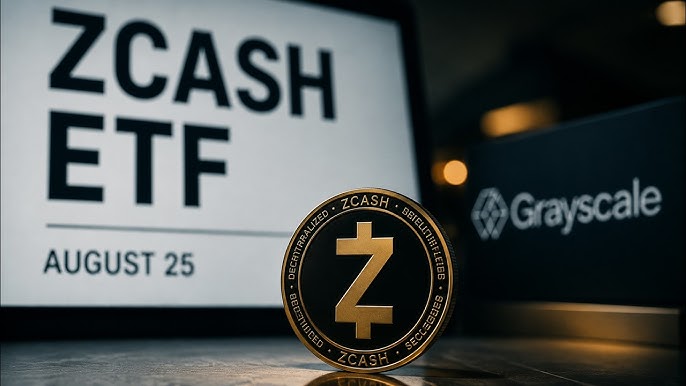
The arrival of a Zcash ETF on the New York Stock Exchange provided a major narrative catalyst for the rally. Grayscale began trading a product designed to give brokerage investors direct exposure to ZEC, broadening access beyond people comfortable buying and holding cryptocurrency themselves.
Yet the timing of the retreat is hardly unusual. Crypto markets frequently price anticipated catalysts before they actually occur. Once a widely watched product launches, early buyers can use the event as an opportunity to realize profits rather than increase their positions.
Privacy coin demand meets a crowded market
Zcash occupies an unusual position in the digital asset market. It offers privacy technology that can shield transaction information while also supporting transparent activity. That distinction has given the privacy coin a dedicated following, even as the regulatory treatment of privacy-enhancing cryptocurrencies remains a long-running issue for exchanges and policymakers.
The latest rally therefore represented more than a simple altcoin bounce. It combined renewed speculative interest, easier investment access and an increasingly bullish wider cryptocurrency market.
Grayscale Opens a New Route to Zcash Exposure
Brokerage access changes the investment equation
The Grayscale ETF gives investors another way to gain exposure to ZEC without directly managing private keys or cryptocurrency wallets. That could matter for investors whose brokerage or compliance arrangements make conventional securities substantially easier to own than native crypto assets.
For Zcash, the launch also represents an important test of institutional and retail demand beyond Bitcoin and Ethereum. The crypto fund industry has become increasingly competitive, encouraging issuers to explore assets and strategies outside the two largest cryptocurrencies.
The Zcash ETF does not guarantee sustained demand for ZEC, however. The longer-term significance of any exchange-traded product depends on actual capital flows, trading activity and investor retention after the launch excitement fades.
Why the first trading sessions deserve attention
Early volume can provide useful information, but investors should avoid treating a strong first day as proof of persistent institutional adoption. New products can attract arbitrage activity, short-term positioning and investors responding specifically to launch publicity.
That makes subsequent fund flows especially important. If the Grayscale ETF continues attracting capital after ZEC’s initial excitement cools, the product could establish itself as a durable new source of demand. Weak follow-through would instead suggest that much of the enthusiasm was already reflected in the token’s rally.
Leverage Raises the Stakes for ZEC Traders
Open interest climbed alongside the price
One of the biggest warning signs surrounding the move is the amount of derivatives activity accompanying it. Zcash perpetual futures open interest reportedly reached approximately $1.8 billion as ZEC pushed above $880.
Rising open interest during a powerful rally can reinforce momentum, but it can also make a market vulnerable to violent reversals. Leveraged traders have liquidation thresholds. When prices move far enough against crowded positions, forced closures can accelerate a decline that initially began as ordinary profit-taking.
That dynamic is particularly important when assessing the latest ZEC price action. An 8% decline after a roughly 60% rise does not by itself determine whether the broader trend has ended. It does demonstrate that traders chasing the rally at elevated prices face substantially different risk than investors who entered before the breakout.
A sell-the-news reaction may not tell the whole story
Calling the decline a classic “sell the news” event is useful shorthand, but the mechanics are more complicated. Some traders likely accumulated ZEC in anticipation of the product launch and then closed positions after trading began. Others may be reducing leverage because the initial catalyst has passed.
If futures positioning unwinds without severe liquidations, ZEC price could potentially establish a more stable range. A disorderly reduction in open interest, by contrast, could amplify volatility even if long-term demand for the Zcash ETF remains intact.
Bitcoin’s $80,000 Breakout Shapes the Wider Market
Zcash is not trading in isolation
The move comes during an unusually strong period for Bitcoin. BTC recently crossed $80,000 for the first time since May after gaining roughly 24% over a week. Spot Bitcoin funds also recorded hundreds of millions of dollars in daily inflows, adding real capital to a rally initially accelerated by short covering.
That backdrop helped create favorable conditions for speculative assets. Strong Bitcoin performance often improves liquidity and risk appetite across crypto, although capital does not necessarily spread evenly through the market.
Indeed, the latest 24-hour action showed weakness across most major tokens despite Bitcoin retaining substantial weekly gains. This divergence is important when interpreting ZEC price. Part of its surge was specific to the Grayscale ETF launch, while part occurred within a powerful market-wide recovery.
Volatility remains elevated across crypto
Other large cryptocurrencies are also showing signs of aggressive derivatives positioning. XRP, for example, has experienced elevated leverage alongside a sharp weekly advance. Meanwhile, Bitcoin derivatives markets are approaching significant expiry levels after BTC rapidly moved from around $62,000 toward $80,000.
Together, these developments suggest traders should distinguish between improving fundamental demand and leverage-driven momentum. Both can push prices upward, but excessive leverage can turn modest corrections into much larger intraday moves.
What Could Determine Zcash’s Next Major Move?
ETF flows become the next measurable catalyst
With the launch itself completed, attention is likely to migrate from anticipation toward measurable adoption. Trading volume, assets accumulated through the product and sustained investor flows will offer more meaningful evidence about demand than launch-day excitement alone.
For the privacy coin, this is also an opportunity to test whether regulated investment wrappers can introduce ZEC to a wider audience. A successful Zcash ETF could encourage the broader crypto asset-management sector to examine additional non-Bitcoin products.
Still, investors should separate access from valuation. Making ZEC easier to buy does not establish what the asset should be worth. Network usage, cryptocurrency market conditions, regulation, liquidity and investor sentiment remain important.
Derivatives positioning could dominate the short term
The immediate ZEC price outlook may depend heavily on whether leveraged positions continue to unwind. After such a large advance, traders will watch previous breakout areas for evidence that buyers are returning.
A controlled consolidation would look very different from cascading liquidations. Conversely, renewed buying combined with excessive leverage could create another sharp rise while leaving ZEC exposed to an equally dramatic reversal.
The launch gives Zcash a meaningful new market structure, but the next stage will be less about the ceremony of going live and more about whether investors continue showing up once the excitement fades.
Frequently Asked Questions
What is driving the recent Zcash price volatility?
ZEC rallied roughly 60% amid wider crypto strength and anticipation surrounding a new exchange-traded investment product. After reaching an eight-year high and moving above $880, profit-taking and heavily leveraged derivatives positioning contributed to an approximately 8% pullback.
Why does the Zcash ETF matter for investors?
The Zcash ETF provides a brokerage-based route to ZEC exposure without requiring investors to directly purchase, store or manage the cryptocurrency. Its longer-term importance will depend on sustained demand and fund flows rather than the launch alone.
Could ZEC fall further after its rally?
Yes. A large rally followed by elevated futures open interest can produce substantial volatility, especially when leveraged positions are forced to close. Continued ETF demand and a strong broader crypto market could provide support, but neither eliminates downside risk. Investors will likely watch fund flows, open interest and Bitcoin’s direction for clues.