

Moscow’s new framework gives crypto businesses a clearer path
A signed law moves Russia from ambiguity toward supervision
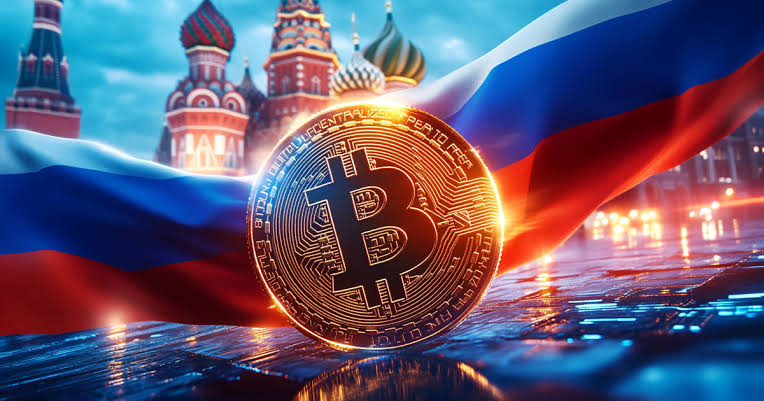
Russia has taken a significant step in shaping its digital asset economy after President Vladimir Putin approved a law that lays out formal rules for crypto platforms, custody providers, and investors. While the most important provisions will not fully kick in until September 2026, the legislation signals that the country wants a more structured and closely watched market rather than a legal gray zone.
The new Russia crypto law appears designed to separate permitted activity from prohibited use cases. One of the clearest boundaries remains intact: digital currencies still cannot be used as everyday payment for goods and services inside Russia. At the same time, the framework leaves room for crypto to play a role in cross-border settlements, a notable distinction given Russia’s broader interest in alternative financial rails.
Why the delayed start date matters
The phased rollout is important. It gives exchanges, custodians, and market participants time to adjust compliance systems, licensing structures, and reporting procedures. That transition window also suggests Russian authorities want implementation to be orderly rather than disruptive.
For the global industry, the Russia crypto law is not just a local headline. It adds to the wider trend of major economies moving away from vague statements and toward detailed operational rules. That usually brings mixed reactions: stricter oversight can deter some firms, but it can also attract larger players that have been waiting for legal clarity before committing capital.
Russia isn’t the only force moving crypto markets
Bitcoin ETFs keep pulling in fresh money
Even as regulation dominates the conversation, investor flows are telling their own story. US-listed spot Bitcoin ETFs recorded another day of inflows, extending a short but meaningful streak that has brought in hundreds of millions of dollars over several sessions. That continued demand is notable because Bitcoin has struggled to decisively push beyond the mid-$60,000 range.
The resilience of Bitcoin ETF inflows suggests that institutional buyers are still stepping in during periods of hesitation. Price may not be exploding higher, but capital continues to enter the market through regulated investment products. That matters because ETF flows increasingly act as a sentiment gauge for broader crypto participation.
Whale accumulation adds another layer
On-chain data has also pointed to large holders increasing exposure to Bitcoin, Ether, and XRP during recent weakness. When whales absorb supply while retail sentiment stays cautious, analysts often interpret it as a sign that stronger hands are building positions ahead of a possible recovery.
Taken together, Bitcoin ETF inflows and whale accumulation paint a market that looks more patient than panicked. That does not guarantee an immediate breakout, but it does support the idea that deeper-pocketed investors are still engaged.
Tokenized assets are expanding beyond the hype cycle
RWA growth is now about usage, not just launches
One of the most important developments in digital assets right now is the expansion of tokenized real-world assets. Recent data showed RWA deposits rising sharply, climbing to roughly $7.4 billion after more than tripling. That jump is meaningful because it indicates tokenization is evolving beyond headline-grabbing announcements and into actual financial activity.
The story here is not just that assets are being issued onchain. Lending, deposits, and trading tied to tokenized instruments are also gaining traction. In other words, this corner of the market is becoming more functional and less experimental.
Traditional finance is paying closer attention
Major financial institutions are also leaning further into tokenization. That matters because established firms tend to move carefully, especially when infrastructure, settlement, and investor protections are involved. As tokenized money market products and reserve assets gain more support, RWA deposits could become one of the most watched indicators of real institutional adoption.
This trend also gives context to the Russia crypto law. Around the world, regulators are trying to build systems that can handle a market no longer driven purely by speculative tokens. As crypto becomes more intertwined with tokenized versions of traditional assets, the pressure to create legal frameworks will only increase.
Funding, refinancing and stablecoin expansion show the market is maturing
Companies are using crypto-native finance in practical ways
Another sign of maturity is how businesses are using digital assets as financing tools rather than just balance-sheet bets. Nasdaq-listed PowerCompute, for example, refinanced debt through a Bitcoin-backed credit facility at an initial rate that would likely catch the attention of many treasury managers. That kind of move shows crypto collateral is becoming more accepted in structured corporate finance.
Meanwhile, Japan’s JPYC said it would use fresh capital to grow its payments and Web3 ecosystem while pushing broader adoption of its yen-linked token. Stablecoin and tokenized payment infrastructure continue to attract interest because they address clear use cases: faster settlement, programmable transfers, and better access to digital liquidity.
Payments giants are inching deeper into blockchain rails
Large payment companies are also testing blockchain-based settlement in more visible ways. New efforts tied to stablecoin payouts and cross-border transfers suggest the sector is increasingly focused on utility. Rather than trying to replace the entire banking system overnight, many firms are looking for specific lanes where crypto infrastructure can reduce friction.
That broader utility angle gives more relevance to the Russia crypto law as well. Regulation becomes far more urgent when digital assets are tied to real transaction flows, financial products, and cross-border use rather than isolated trading activity.
Security threats remain one of crypto’s biggest weak spots
Fake licensed-provider websites are targeting users
As the market professionalizes, criminals are adapting just as fast. Reports indicate that scammers are creating counterfeit websites and forged documents to trick users who are specifically searching for approved or licensed crypto companies. That is a particularly dangerous tactic because it exploits trust in regulation itself.
In practical terms, this means legal clarity alone is not enough. The Russia crypto law may help define legitimate operators, but bad actors are likely to imitate compliant businesses wherever possible. Users will still need to verify identities, licenses, and communications carefully before moving funds.
Wallet and infrastructure concerns are back in focus
Security worries have also intensified after fresh concerns around hardware wallets and broader custody practices. These incidents have revived an old debate in crypto: who should hold assets, and what level of technical trust is acceptable? Even the strongest compliance framework cannot fully protect users from flawed products, social engineering, or operational mistakes.
That is why security remains inseparable from adoption. Every time the industry makes progress through Bitcoin ETF inflows, rising RWA deposits, or a major regulatory step like the Russia crypto law, the next challenge is proving the system is safe enough for mainstream participation.
The bigger picture: a market growing up unevenly
Regulation, capital and risk are advancing at the same time
The current crypto landscape is not moving in one simple direction. On one side, legal frameworks are becoming more detailed. On another, institutional money continues to flow into products like spot Bitcoin ETFs. At the same time, tokenized finance is gaining substance through larger RWA deposits and more active use cases.
Yet this progress is happening alongside fraud, cyber risk, and political uncertainty. That contradiction is becoming a defining trait of the industry. Crypto is no longer a fringe experiment, but it is not a fully settled financial sector either.
Why 2026 could become a key turning point
The delayed implementation of the Russia crypto law makes 2026 an especially important marker. By then, several major threads may converge: more mature tokenization markets, deeper stablecoin integration, expanded institutional access, and stronger compliance expectations across jurisdictions.
If that happens, today’s fragmented headlines may eventually look like early signs of a more ordered global market. Until then, investors should expect a constant push and pull between innovation and oversight, growth and caution, optimism and operational risk.
Frequently Asked Questions
What does the new Russia crypto law actually do?
It establishes a clearer legal framework for crypto exchanges, custodians, and investors in Russia. It also preserves the ban on using crypto for domestic everyday payments while still allowing certain cross-border applications.
When will the main parts of the Russia crypto law take effect?
The core provisions are expected to come into force in September 2026, giving companies time to prepare compliance and operational changes.
Why are Bitcoin ETF inflows and RWA deposits important right now?
They show that institutional and product-driven demand is still growing even in a mixed market. Bitcoin ETF inflows reflect continued investor appetite, while RWA deposits point to expanding real-world use of blockchain-based financial products.