


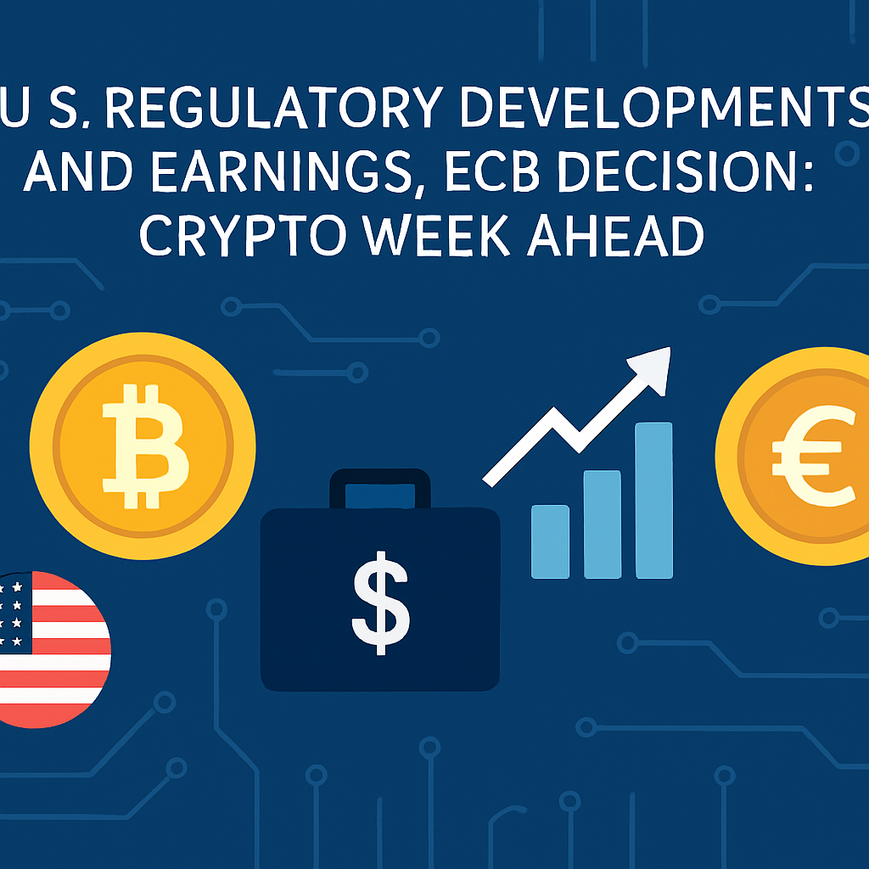
As markets reopen for the week starting July 20, a packed calendar of policy moves, earnings, and technical developments will shape crypto sentiment. From U.S. regulatory pressure and the ECB’s policy messaging to the first large-scale corporate stablecoin rollout in Japan, traders will parse macro cues and onchain flows. This crypto week ahead preview breaks down the events most likely to move prices and liquidity.
U.S. regulatory milestones and corporate earnings that matter
GENIUS Act rollouts and rulemaking noise
U.S. regulators missed the GENIUS Act’s one-year implementing deadline and instead issued 10 proposed rules, creating a patchwork of guidance that markets must interpret. Expect fresh commentary from Capitol Hill and potential industry responses this week that could alter institutional risk appetite and trading flows.
Earnings season and bank results
Major firms reporting results will influence risk assets and the crypto-correlated flows that have dominated recent weeks. Watch for how banks and brokerages describe digital asset exposure, custody plans, and tokenization pilots — corporate language here tends to filter quickly into ETF demand and OTC desk activity.
ECB’s policy stance and the digital euro debate
ECB rate decision and its cross-market ripple effects
The ECB’s rate decision will be scrutinized for both terminal rate signals and the tone on inflation. An unexpected hawkish tilt could boost the euro and safe-haven flows, pressuring risk assets, while dovish surprises might give crypto a temporary tailwind. Mentions of liquidity implications are likely to show up in equity and crypto correlations.
Stablecoins, digital euro and deposit risks
ECB board member Piero Cipollone has warned that stablecoin adoption could erode bank deposits, pitching the digital euro as the countermeasure to keep banks central in payments. That framing will re-ignite debates about how a euro digital currency would interact with commercial stablecoin markets under MiCA-era rules.
JPYC corporate stablecoin rollout: practical payments use-case
Japan’s 2,300-partner payroll trial
A Japanese logistics firm plans to pay 2,300 partners, including truck drivers, using JPYC — marking Japan’s first large-scale corporate stablecoin rollout. The planned scheme aims to accelerate payout frequency and reduce friction, offering an early real-world test of payments rails built on onchain stablecoins.
Broader implications for stablecoin adoption
This stablecoin rollout could set a precedent for payroll, supplier, and gig-economy payments in jurisdictions with strong regulatory oversight. Expect close regulatory attention and operational feedback from counterparties — successful execution would strengthen the use-case narrative for tokenized payments.
Markets snapshot: oil, chips, Bitcoin and ETF flows
War-driven oil spike and chip-stock volatility
Geopolitical escalation pushed Brent nearly 4% higher as U.S.-Iran strikes intensified, while a surprise AI model release from Moonshot and an open-weight Qwen from Alibaba triggered a shock selloff in Asian chip stocks. These moves have created a backdrop of mixed risk sentiment heading into the week.
Bitcoin positioning, ETF demand and options bets
Bitcoin sits between the macro drivers: ETF flows show $273 million of new inflows in two weeks, with $79.2 million added on a recent Thursday — meaningful but thin relative to recent selling. Options market flow suggests large traders are betting on a push toward $72,000 by month-end. Still, thin liquidity (about $542 million sitting outside active ranges last week) leaves BTC vulnerable to sudden swings.
Tech and security: post-quantum proofs, attacks and exploits
Project Eleven’s post-quantum ownership proof
Project Eleven announced a proof that uses a wallet’s key-derivation path as a post-quantum ownership verification, running in 243 milliseconds on a laptop. If adopted, this could become part of recovery and resilience strategies ahead of Q-Day, offering a novel approach to preserve access when signature schemes are threatened.
Ongoing exploits and malware threats
Security incidents persist: attackers exploited a bridge using flash loans and rapid swaps to manipulate stablecoin exchange rates, draining DeFi funds. Kaspersky and other firms flagged new malware frameworks targeting crypto investors — a reminder that wallet hygiene and third-party vetting remain critical.
Tokenization, CBDC pilots and institutional infrastructure
Bank of Korea expands CBDC pilot and tokenized payments
The Bank of Korea will add two regional banks to its CBDC pilot, test tokenized bank-deposit subsidies, and roll out new payment features. These pilots signal that tokenized liabilities and programmable payments are moving from lab to production testing in East Asia.
Wall Street tokenization and custody moves
A Broadridge survey and recent institutional product approvals show Wall Street accelerating tokenization pilots. From custody (Zero Hash enabling Morgan Stanley clients to hold crypto) to digital securities sandboxes, the institutional plumbing is improving — a structural trend that could raise stable demand over time, assuming clearer regulatory frameworks.
Frequently Asked Questions
What are the key events in this crypto week ahead?
The week centers on U.S. regulatory rulemaking fallout, the ECB’s policy signals, corporate earnings that touch crypto exposures, Japan’s JPYC payroll rollout, and ongoing ETF flows and options positioning in Bitcoin.
How might the ECB rate decision affect crypto prices?
An unexpectedly hawkish stance could tighten liquidity and pressure risk assets including crypto, while dovish guidance might ease rates concerns and briefly support risk-on flows. Comments on digital payments and stablecoins could also sway regulatory expectations.
Will JPYC’s stablecoin rollout accelerate broader corporate stablecoin adoption?
If the Japanese logistics trial succeeds operationally and passes regulatory scrutiny, it could serve as a blueprint for payroll and supplier payments, encouraging other firms to test stablecoin-based disbursements — but scalability, compliance, and counterparty acceptance remain the main hurdles.

![[Bitmine ether purchases]](https://cryptonews.guru/wp-content/uploads/2026/07/data-94.png)


![[Cardano hard fork]](https://cryptonews.guru/wp-content/uploads/2026/07/data-91.png)