

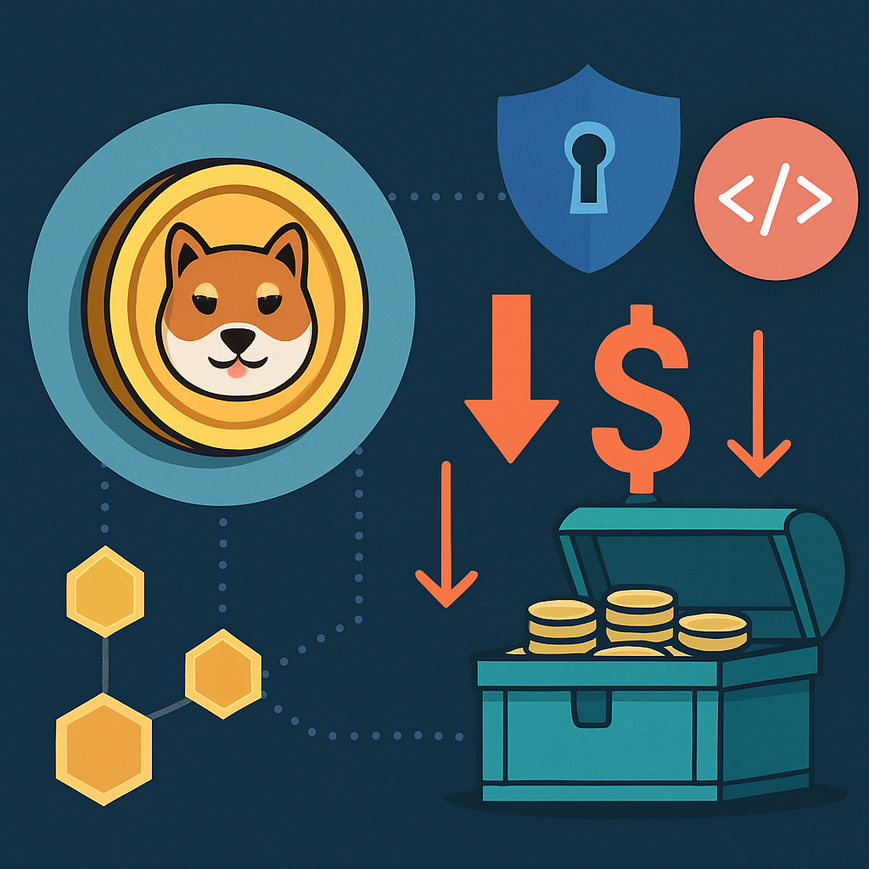
How the BONK treasury drain unfolded
Timeline of the governance takeover
Multiple on-chain sleuths and project insiders report that a single attacker spent roughly $4 million buying the memecoin to accumulate the voting power needed to pass a malicious proposal. That proposal redirected a large portion of the BONK DAO treasury—estimated at about $20 million—to a wallet controlled by the attacker. Once control was gained, the wallet began offloading tokens into liquidity pools and exchanges.
Cheap takeover, expensive consequences
The incident highlights how a relatively modest purchase can yield devastating results when governance power is concentrated or when token distribution lacks safeguards. The BONK treasury drain shows attackers can weaponize tokenized voting to convert community funds into liquid gains with minimal upfront capital.
Mechanics of the governance exploit
How the attacker leveraged token distribution
Attacks like this rely on imbalanced token ownership and low quorum or timelock protections. By buying up a critical mass of tokens on Solana, the attacker met proposal thresholds and executed a transfer before the wider community could respond. The core of the problem was not just a malicious bidder, but governance design that allowed immediate execution once a vote passed.
Why memecoins are high-risk targets
As a fast-moving Solana memecoin, BONK lacked the layered defenses that institutional treasuries often have—multisig, delayed execution, and curated signers. That makes memecoins cheap targets for governance exploits: a concentrated buyer can tilt votes and trigger fund movements in hours, not days.
Market reaction and immediate fallout
Price moves and exchange responses
After the proposal passed and funds landed in attacker-controlled wallets, sell pressure sent BONK prices tumbling from session levels as the attacker sold into liquidity. Buyers defended some session lows, and exchanges noticed suspicious flows. Upbit and other platforms reportedly suspended BONK deposits and withdrawals as funds were traced to centralized venues, prompting an Upbit suspension on transfers to stem secondary market contagion.
Broader market sentiment
Memecoin communities reacted with a mix of outrage and resignation. Developers issued statements that law enforcement had been notified and that recovery efforts were underway, but the reputation damage and the short-term holder losses are already material. The BONK treasury drain also fed a wider narrative about governance fragility in DeFi and memecoin projects.
Technical weaknesses to address
Governance parameters that invite attacks
Low voting quorums, no execution delays, and single-signature treasury control are red flags. Projects that allow near-instant execution following a successful vote effectively hand attackers a “fast lane” to transfer funds. BONK’s exploit underscores the need for minimum delay windows and checks on large transfers.
Practical fixes: from timelocks to multisigs
Best practices to prevent future treasury drains include multisig wallets with independent signers, built-in timelocks on governance-executed fund movements, and veto mechanisms or community guardians for emergency freezes. Formal on-chain timelocks can give the community time to react to suspicious proposals before irreversible actions occur.
Recovery efforts and legal response
Developers and law enforcement involvement
Project maintainers said they alerted law enforcement and are working to identify the responsible parties and recover funds. Recovery in token thefts often depends on exchange cooperation and on-chain forensic tracing; where funds hit compliant exchanges, freezing and clawback become possible but are neither guaranteed nor immediate.
Tracing funds and exchange cooperation
Because some stolen tokens were moved through exchanges, platforms have been pressured to act. The Upbit suspension illustrates how exchanges can limit further laundering by stopping deposits and withdrawals. However, recovery still relies on prompt reporting, KYC records, and legal channels across jurisdictions.
What the BONK exploit means for the memecoin ecosystem
A wake-up call for token projects
The BONK treasury drain is a reminder that governance is a security surface. Teams launching memecoins should assume that any on-chain voting mechanism will one day be tested by bad actors. Projects must prioritize governance audits and conservative upgrade paths.
Industry trend: rising exploits and scrutiny
This incident arrives amid a broader rise in protocol exploits across crypto. Quarter-over-quarter data shows exploit activity climbing, and memecoins with lightweight governance are increasingly on the radar. The industry must balance fast iteration with hardened treasury controls if these communities are to retain credibility.
Frequently Asked Questions
What exactly happened in the BONK treasury drain?
An attacker purchased enough BONK tokens—reportedly costing about $4 million—to pass a governance proposal that authorized transfers. The attacker then redirected roughly $20 million from the BONK DAO treasury to a wallet they controlled and began selling.
Can stolen treasury funds be recovered?
Recovery depends on where the stolen assets move. If funds hit centralized exchanges that cooperate with law enforcement and have KYC data, freezing and recovery are possible. However, if funds are rapidly swapped into other on-chain assets or moved to noncompliant venues, recovery becomes much harder.
How can other projects avoid governance exploits?
Projects should implement multisig treasury controls, enforce execution timelocks on governance actions, set higher quorums for critical transfers, and conduct formal security audits of governance contracts. These measures increase the cost and complexity for attackers and provide the community time to respond to malicious proposals.